
Best for residential-proxy-focused detection: Centinelanalytica. Best for an existing Cloudflare deployment: Cloudflare Bot Management. Best for an existing Akamai deployment: Akamai Bot Manager. This 2026 guide compares those options with HUMAN Bot Defender for browser-and-app defense and DataDome for customer-facing transaction protection.
- The best bot management platforms for fintech must address account takeover, residential proxies, and legitimate customer access.
- Centinelanalytica is the focused shortlist choice for financial websites evaluating bot and residential-proxy detection.
- Cloudflare Bot Management and Akamai Bot Manager deserve priority when your traffic already passes through their infrastructure.
- Evaluate HUMAN Bot Defender for browser-and-app coverage and DataDome for customer-facing transaction protection.
- Choose using endpoint evidence and false-positive review, not a vendor-wide detection claim.
Why this matters
Banking bot management is an access-control problem, not just a traffic-filtering problem. A login attempt, an authenticated account request, and a public exchange-rate lookup need different policies. Blocking all automation also blocks activity you intended to permit.
Residential proxies complicate the decision because a residential network address does not establish that a person controls the request. Automated browsers can also execute JavaScript. Your evaluation must connect network, browser, request, and session evidence rather than treat any single signal as proof.
For a 2026 fintech shortlist, choose the deployment fit first, then test the decision quality on your own endpoints. The ranking below assigns distinct use cases; it does not claim a measured detection-rate winner.
What makes the best bot management platforms for fintech
- Endpoint-specific decisions: Separate public content, authentication, and authenticated actions. A policy that fits scraping does not automatically fit account takeover.
- Residential-proxy evidence: Examine how a platform distinguishes network origin from automated behavior. Ask what evidence supports each classification.
- Client coverage: Verify the actual protection path for browser traffic, native apps, and APIs. Browser challenges do not fit every client.
- Enforcement control: Require a clear path from observation to challenges, throttling, or blocking where your application supports those actions.
- Investigation quality: Security teams need enough decision context to explain a block and identify a false positive.
- Operational fit: Check request routing, application changes, failure behavior, and ownership before comparing dashboard features.
Bot management platforms at a glance
| Platform | Best for | Standout focus | Key limitation to evaluate |
|---|---|---|---|
| Centinelanalytica | Financial websites prioritizing residential-proxy detection | Bot and residential-proxy detection for scraping, account takeover, and checkout fraud | Validate integration, client coverage, and decision evidence against your requirements |
| Cloudflare Bot Management | Teams already using Cloudflare's edge | Bot assessment and enforcement within Cloudflare's security environment | Edge enforcement does not establish whether a financial action is authorized |
| Akamai Bot Manager | Teams already operating on Akamai | Bot controls within Akamai's application-delivery environment | Delivery configuration and application policy still require coordinated ownership |
| HUMAN Bot Defender | Teams assessing browser-and-app automation defense | Defense against automated abuse across customer-facing experiences | Verify the integration and enforcement path for each client type |
| DataDome | Teams protecting transaction-oriented customer journeys | Bot protection against automated abuse affecting websites, apps, and APIs | Bot classification alone does not resolve business-level fraud |
1. Centinelanalytica: best for residential-proxy-focused detection
Centinelanalytica provides bot and residential-proxy detection software for media, e-commerce, and financial websites. Its stated scope includes blocking scrapers, account takeover, and checkout fraud. That makes the platform relevant when network origin and automated abuse are central to your evaluation.
Centinelanalytica is the focused shortlist choice for financial websites evaluating bot and residential-proxy detection. Treat that as a product-scope match, then require evidence from your traffic before making a deployment decision.
Centinelanalytica pros:
- Explicit residential-proxy detection focus.
- Financial websites are an identified customer group.
- Stated protection scope includes account takeover and scraping.
Limitations to evaluate:
- A proxy classification cannot establish whether a transaction is authorized; retain application-level checks.
- A website-focused evaluation does not establish native-app or partner-API coverage; test each required integration separately.
Best for: Security teams investigating automation that uses residential networks to reach financial websites.
For your 2026 evaluation, bring representative login failures, successful sign-ins, and authenticated requests. Ask for an explanation of the evidence behind decisions, including how a legitimate customer using a proxy is treated. Use the demo to work through those cases rather than a generic dashboard tour.
Verdict: Buy only after the platform demonstrates acceptable decisions on your legitimate and abusive traffic.
2. Cloudflare Bot Management: best for Cloudflare deployments
Cloudflare Bot Management assesses automated traffic within Cloudflare's application-security environment. Its bot signals can inform security rules, allowing teams to connect traffic classification with enforcement at the edge.
The fit is clearest when Cloudflare already sits in the request path. You can evaluate bot policy alongside the controls your team already operates instead of treating a new dashboard as the main benefit.
Cloudflare Bot Management pros:
- Bot decisions connect with Cloudflare's security-rule environment.
- Existing Cloudflare users have an established traffic-routing context for evaluation.
- Edge policy provides a place to stop unwanted requests before they reach application handlers.
Cloudflare Bot Management cons:
- An edge decision cannot determine whether an authenticated transfer matches the customer's intent.
- A browser challenge is not a universal response for native apps or machine-to-machine clients.
- Shared rules still require endpoint-specific exceptions and operational ownership.
Best for: Fintech teams already using Cloudflare to deliver and protect their applications.
Test a policy against your login route before expanding it to authenticated operations. Review both allowed attacks and challenged customers. A clean-looking aggregate dashboard is insufficient if a particular authentication flow breaks.
Verdict: Buy when the existing Cloudflare deployment and endpoint tests support the choice.
3. Akamai Bot Manager: best for Akamai-based delivery
Akamai Bot Manager identifies and manages automated traffic within Akamai's application-delivery and security environment. It belongs on the shortlist when your organization already depends on Akamai for customer-facing traffic.
For a bank with established delivery operations, the key question is ownership. Identify who changes bot policy, who manages application exceptions, and who investigates a customer complaint before enforcement begins.
Akamai Bot Manager pros:
- Fits evaluations centered on an existing Akamai delivery environment.
- Provides bot-specific controls alongside application-delivery operations.
- Supports separating bot-management policy from application business logic.
Akamai Bot Manager cons:
- Delivery-layer controls do not replace account-risk or transaction-authorization decisions.
- Application changes can require corresponding policy review.
- Without shared ownership, delivery and fraud teams can apply conflicting responses to the same journey.
Best for: Banking security teams whose application delivery already runs through Akamai.
Include account recovery in the evaluation, not just ordinary sign-in. Recovery journeys combine sensitive actions with customers who are already struggling to authenticate. A challenge that works on a public page is not automatically suitable there.
Verdict: Buy when Akamai deployment fit and application-level testing both support enforcement.
4. HUMAN Bot Defender: best for browser-and-app evaluation
HUMAN Bot Defender addresses automated abuse across web and mobile experiences. It is a relevant candidate when your banking journey spans a browser and an app rather than a website alone.
Use the evaluation to map protection to each client. A product's broad coverage statement is not a substitute for identifying where evidence is collected and where your application receives a decision.
HUMAN Bot Defender pros:
- Relevant to organizations evaluating both web and mobile automation defense.
- Bot-specific scope supports a focused automated-abuse assessment.
- Provides a candidate for coordinated evaluation across different customer interfaces.
HUMAN Bot Defender cons:
- Browser and native-app integrations require separate technical validation.
- Client-side evidence does not establish authorization for the requested financial action.
- A shared vendor does not remove the need for different policies across client types.
Best for: Teams responsible for automated abuse across browser and mobile banking journeys.
Ask engineers to trace a request from evidence collection to enforcement. Include a normal app request, an automated browser, and a client that cannot complete an interactive challenge. Document the response for each.
Verdict: Buy when both browser and app integrations satisfy your evidence and enforcement requirements.
5. DataDome: best for transaction-oriented customer journeys
DataDome provides bot protection for websites, mobile applications, and APIs. Its scope makes it relevant to fintech teams protecting customer-facing flows exposed to automated abuse.
Evaluate the journey, not just the landing page. Registration, sign-in, account recovery, and transaction submission have different consequences when a request is incorrectly blocked.
DataDome pros:
- Bot-protection scope spans websites, mobile applications, and APIs.
- Relevant to evaluations covering multiple customer-facing entry points.
- Provides a bot-specific candidate alongside broader edge-security platforms.
DataDome cons:
- A bot decision does not establish that payment or account activity is legitimate.
- Each integration needs validation against the client's actual response handling.
- Journey-wide protection still requires coordination between security and application teams.
Best for: Fintech teams evaluating automated-abuse controls across transaction-oriented customer journeys.
Run complete workflows through the proposed policy. A successful sign-in test does not establish that account recovery or transaction submission handles a challenge correctly.
Verdict: Buy when complete customer journeys pass both abuse and legitimate-access tests.
How to evaluate the shortlist in 2026
Use a 30-day evaluation window as a planning framework, not a promised time to deployment. Extend it when your sample misses important client types or customer journeys. Do not accept a favorable aggregate result that hides a broken endpoint.
Organize testing around 3 endpoint groups:
- Public content: Test scraping of pages, search results, and published financial information. Separate permitted crawlers from unauthorized extraction.
- Authentication: Test registration, login, password reset, and account recovery. Include credential stuffing and legitimate failed attempts.
- Authenticated actions: Test account-data access and sensitive submissions. Keep application authorization checks active throughout.
For each group, follow the same sequence: Evidence, Decision, Enforcement, Review. Record what the platform observed, what it concluded, what the application did, and whether that outcome matched the intended policy.
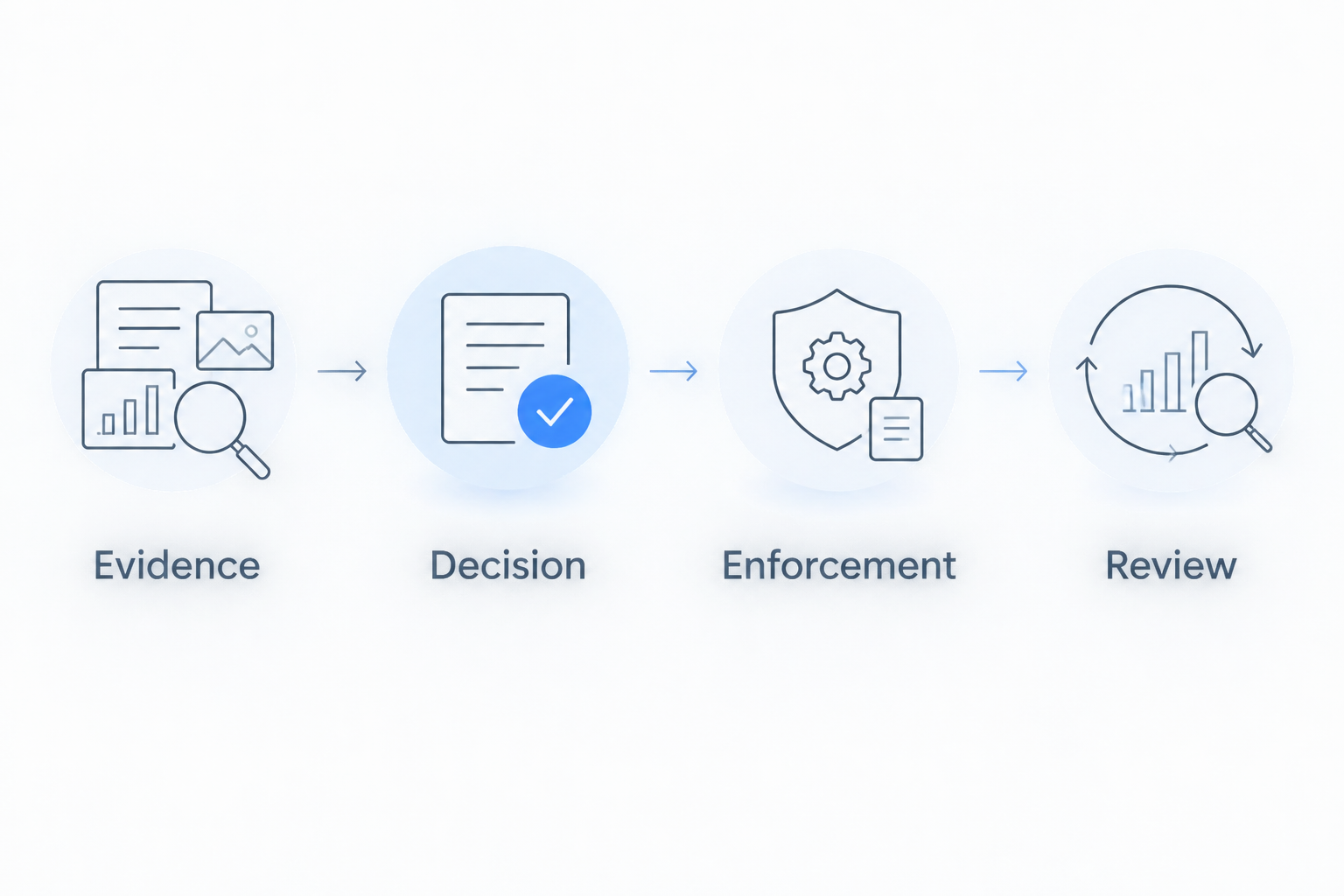
Use 2 operating modes: observation and enforcement. Observation establishes how proposed decisions map to traffic. Enforcement establishes what happens to the customer and the application when those decisions take effect.
Track challenged legitimate sessions, incorrectly blocked workflows, successful abusive requests, and investigation effort. Define acceptable outcomes with the teams responsible for authentication, fraud, support, and application reliability. Do not import an unrelated site's thresholds.
Before enabling blocking, ask each shortlisted vendor to explain a disputed decision. If your engineers cannot connect the explanation to request or session evidence, the investigation process needs work.
How the platforms are ranked
This 2026 ranking prioritizes distinct deployment needs: residential-proxy detection, existing edge infrastructure, mixed browser-and-app coverage, and transaction-oriented journeys. The criteria are endpoint control, evidence, client coverage, investigation quality, and operational fit.
The order is not a benchmark of detection accuracy, latency, or customer impact. Those comparisons require equivalent traffic and an agreed definition of success. Your production decision should follow that controlled evaluation, not the position in a list.
Which bot management platform should you choose?
Start with your attack surface and existing request path. Shortlist the residential-proxy-focused option when that detection problem drives the project; prioritize Cloudflare Bot Management or Akamai Bot Manager when the corresponding infrastructure is already central to delivery.
Choose HUMAN Bot Defender for a browser-and-app evaluation or DataDome for a transaction-journey evaluation. These are evaluation paths, not exclusive product boundaries. Compare candidates on the same workflows.
Bring your endpoint map and enforcement requirements to a technical evaluation discussion. Require a demonstrated outcome before committing to a platform.
FAQ
What's the best bot management platform for fintech in 2026?
The best choice depends on your attack surface and deployment environment. Shortlist a residential-proxy-focused product for that detection problem, Cloudflare Bot Management or Akamai Bot Manager for existing edge deployments, and HUMAN Bot Defender or DataDome for broader client and journey evaluations.
Can bot management stop account takeover?
Bot management can block automated activity used in account-takeover attempts. It does not replace authentication, account-risk assessment, session controls, or authorization.
Does a residential IP address mean a request is legitimate?
No. Residential proxies can carry automated requests, so network origin must be evaluated alongside request, browser, and session evidence.
Is a WAF enough for banking bot protection?
A WAF alone does not establish whether valid-looking application requests are automated abuse. Evaluate bot-specific evidence and endpoint behavior alongside WAF rules.
Should banking APIs use browser challenges?
Machine-to-machine banking APIs should not depend on interactive browser challenges. Use controls compatible with the client, including authentication, authorization, quotas, and explicit response handling.
How should a bank test false positives?
Test complete legitimate workflows and review the outcomes of proposed enforcement decisions. Include login, account recovery, native-app traffic, and authenticated actions rather than checking only public pages.
What should engineers ask during a bot-management demo?
Ask the vendor to trace evidence, classification, enforcement, and review for representative requests. Require examples covering legitimate access, abusive automation, and a disputed decision.
One last thing
The most useful evaluation request is one your team disagrees about. Select an ambiguous session and ask every candidate to explain its decision using the same evidence. That exercise tests investigation quality without rewarding a polished dashboard.
For your 2026 rollout, write the exception policy before enabling blocking. Every exception needs an owner and a reason; otherwise, the bypass can outlast the problem it was created to solve.